
RO Plant for Boiler
A reverse osmosis (RO) boiler is a water treatment system designed to remove dissolved impurities such as minerals and salts from the water used in the boiler. This is important because impurities in the water can damage the boiler and reduce its efficiency.
RO equipment works by using a semi permeable membrane to separate dissolved impurities from the water. The water is first pumped through a pre-treatment system that removes larger particles and impurities. It then passes through an RO membrane, where impurities are filtered out and the purified water is captured. The impurities are then flushed out of the system and the purified water is ready for use in the boiler.
One of the main advantages of RO equipment for a boiler is that it can significantly improve boiler efficiency. Impurities in the water can cause scaling and corrosion in the boiler, which can lead to reduced efficiency and increased maintenance costs. RO equipment can help prevent this by removing contaminants before they can cause damage.
Another benefit of RO equipment for a boiler is that it can help extend the life of the boiler. Impurities in the water can cause wear and tear on the boiler over time, which can lead to costly repairs or replacement. RO equipment can help prevent this by removing contaminants before they can cause damage.
Overall, a boiler RO is a worthwhile investment for any facility that relies on a boiler to operate. It can help improve boiler efficiency, extend boiler life and reduce maintenance costs. If you are considering RO equipment for your boiler, it is important to work with a reputable water treatment company that has experience designing and installing these systems.
Working of RO Boiler Plant
A reverse osmosis (RO) boiler is a system that uses reverse osmosis technology to purify water and then uses the purified water to produce steam for industrial or commercial use.
The process begins by feeding raw water into the RO system, where it is forced under high pressure through a semi-permeable membrane. The membrane removes impurities such as dissolved salts, minerals and other contaminants, leaving clean water behind. The cleaned water is then stored in a storage tank for use in the boiler.
The boiler itself is a heat exchanger that uses purified water as a heat transfer medium. A fuel source such as natural gas, oil or electricity is used to heat the water, which is converted into steam. The steam is then piped to where it is needed, such as a turbine or heat exchanger, to generate electricity or provide heat for industrial processes.
An RO boiler also contains a number of other components such as pumps, valves and controls to ensure that the water and steam are flowing properly and that the system is operating at optimum efficiency.
One of the key benefits of using an RO boiler is that it can produce high-quality steam with minimal impurities, which can reduce the risk of equipment damage and extend the life of the boiler. In addition, the RO system itself can be used to purify water for other applications such as drinking water or industrial processes.
Overall, the RO boiler is a reliable and efficient way of producing steam for industrial and commercial purposes, while ensuring high quality of the water used.
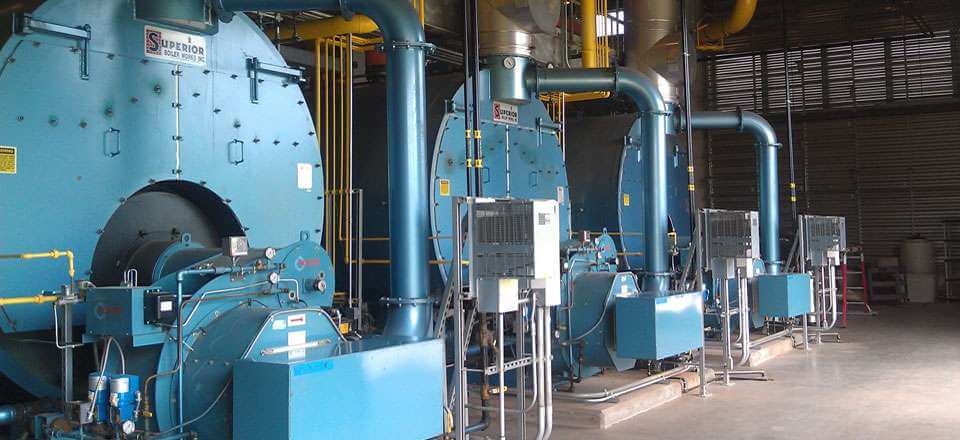
RO Plant for Boiler
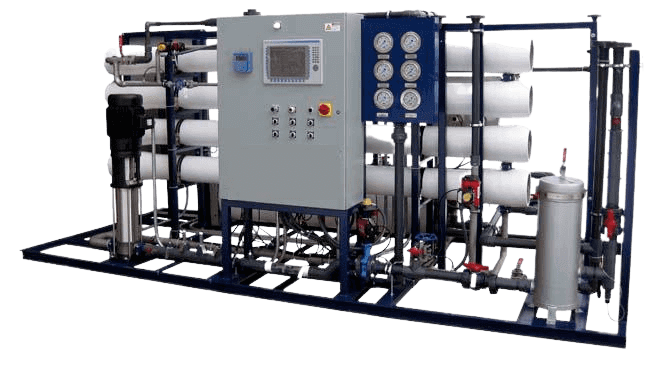
RO Plant for Boiler
The RO Plant Boiler is a key component of Reverse Osmosis (RO) water treatment systems. It is responsible for heating the water that is used in the RO process, ensuring that it is at the correct temperature for optimal performance.
The RO process involves forcing water through a semi-permeable membrane that removes impurities such as dissolved salts, bacteria and other contaminants. The water is then purified and ready for use. However, for the RO process to work effectively, the water must be heated to a certain temperature range, typically between 80-85°C. This is where the RO Plant Boiler comes in.
RO Plant Boilers come in various sizes and designs depending on the RO plant size and water flow rate. They can be powered by natural gas, propane or electricity and can be designed to operate automatically or manually.
Advantages of RO Plant Boiler
Reverse osmosis (RO) boilers have several advantages, including:-
- RO removes impurities such as dissolved salts, bacteria and viruses, resulting in clean, high quality water suitable for use in boilers.
- RO systems require minimal maintenance, resulting in lower operating costs.
- RO systems use less energy than traditional water treatment methods, making them more cost-effective in the long run.
- RO systems take up less space than traditional water treatment methods, making them ideal for use in boilers with limited space.
- RO systems do not use chemicals, making them a more environmentally friendly option for boiler water treatment.
- RO systems have a high rate of regeneration, which means they can produce a large amount of purified water using a small amount of energy.
- RO systems help prevent scale build-up in boilers, which can reduce the need for costly maintenance and extend boiler life.
- RO systems remove dissolved minerals, which can help prevent rust and corrosion in boilers.
Overall, reverse osmosis boilers are a cost-effective and efficient boiler water treatment solution with high water purity and low maintenance requirements.
Advantages of RO Plant Boiler
Reverse osmosis (RO) boilers have several advantages, including:-
- RO removes impurities such as dissolved salts, bacteria and viruses, resulting in clean, high quality water suitable for use in boilers.
- RO systems require minimal maintenance, resulting in lower operating costs.
- RO systems use less energy than traditional water treatment methods, making them more cost-effective in the long run.
- RO systems take up less space than traditional water treatment methods, making them ideal for use in boilers with limited space.
- RO systems do not use chemicals, making them a more environmentally friendly option for boiler water treatment.
- RO systems have a high rate of regeneration, which means they can produce a large amount of purified water using a small amount of energy.
- RO systems help prevent scale build-up in boilers, which can reduce the need for costly maintenance and extend boiler life.
- RO systems remove dissolved minerals, which can help prevent rust and corrosion in boilers.
Overall, reverse osmosis boilers are a cost-effective and efficient boiler water treatment solution with high water purity and low maintenance requirements.