
RO Plant For Community
A potable RO plant provides pure drinking water equivalent to bottled water. Community reverse osmosis (RO) is a water purification technology that uses a semi-permeable membrane to remove larger particles from drinking water. In reverse osmosis, an applied pressure is used to overcome the osmotic, colligative property that is controlled by the chemical potential, a thermodynamic parameter. Reverse osmosis can remove many types of molecules and ions from solutions, including bacteria, and is used in both industrial processes and drinking water production. As a result, the solute is retained on the pressure side of the membrane and the pure solvent is allowed to pass through to the other side. To be “selective”, this membrane should not allow large molecules or ions to pass through the pores (openings) but should allow smaller components of the solution (e.g. solvent) to pass freely. Reverse osmosis involves diffusion, making the process dependent on pressure, flow, and other conditions. Reverse osmosis is most commonly known for its use in purifying drinking water from seawater and removing salt and other wastes from water molecules.
Working of RO Community Plant
A community reverse osmosis (RO) plant is a water treatment system designed to purify and disinfect water for a community or group of people. It works by forcing water through a semi-permeable membrane that removes dirt and contaminants, leaving clean and safe drinking water behind.
The community RO plant process begins with receiving raw water from a source such as a river or well. The water then passes through a series of filters, including sediment filters and activated carbon filters, to remove larger particles and dissolved impurities.
Next, the water is forced through the RO membrane under high pressure. The RO membrane is made of a thin layer of semi-permeable material that allows only water molecules to pass through while repelling impurities such as bacteria, viruses, dissolved salts and other contaminants.
After the water passes through the RO membrane, it goes through a post-treatment process to disinfect and further purify the water. This process may involve using ultraviolet (UV) light or chlorine to kill any remaining bacteria or viruses.
The final step in the community RO plant process is the storage and distribution of treated water. Water is stored in large reservoirs and then pumped to homes, businesses and other places where it is needed.
Overall, a community RO plant is a highly effective and efficient way to provide clean and safe drinking water to the community. It is a vital part of a community’s water supply system, ensuring that the water is free of harmful impurities and contaminants.
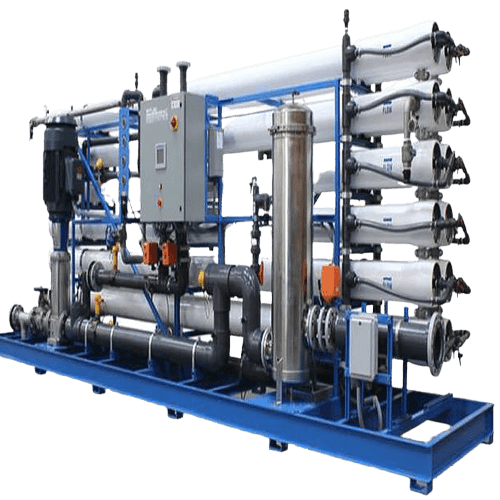
Reverse Osmosis Plant For Community
RO Plant For Community
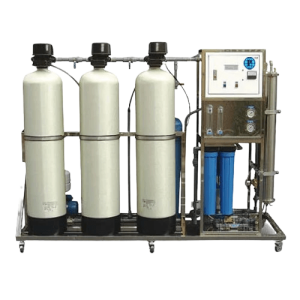
RO Plant For Community
A reverse osmosis (RO) device is a water treatment system that removes impurities from water by using a semi-permeable membrane to filter out molecules larger than water molecules. This type of equipment is commonly used in community settings such as apartment complexes, apartment buildings and small towns to provide clean and safe drinking water.
RO equipment typically consists of several stages, including pretreatment, filtration, and posttreatment. Pretreatment includes steps such as sediment filtration and chemical dosing to remove suspended solids and other impurities. The water then passes through an RO membrane, which removes dissolved salts, metals and other impurities. Post-treatment includes steps such as disinfection and pH adjustment to ensure the water is safe to drink.
Advantages of Community RO Plant
Community RO plants are very cost-effective as they can be installed in large numbers for a large population at a reduced cost.
Community RO plants help reduce water wastage as they recycle and reuse waste water. They thus help to reduce the impact on the environment.
Community RO plants are easy to install and maintain. This reduces the overall cost of installation.
Community RO plants are reliable because they are designed to meet the specific needs of the community.
Community RO plants provide high quality water free from contaminants. This ensures the supply of clean and safe drinking water to the population.
Community RO plants can be customized to meet the specific needs of the community. This helps ensure that the water supplied is of the highest quality.
Community RO plants provide a sustainable solution for communities. They can be operated for a long time without the need for regular maintenance and repairs.
Advantages of Community RO Plant
Community RO plants are very cost-effective as they can be installed in large numbers for a large population at a reduced cost.
Community RO plants help reduce water wastage as they recycle and reuse waste water. They thus help to reduce the impact on the environment.
Community RO plants are easy to install and maintain. This reduces the overall cost of installation.
Community RO plants are reliable because they are designed to meet the specific needs of the community.
Community RO plants provide high quality water free from contaminants. This ensures the supply of clean and safe drinking water to the population.
Community RO plants can be customized to meet the specific needs of the community. This helps ensure that the water supplied is of the highest quality.
Community RO plants provide a sustainable solution for communities. They can be operated for a long time without the need for regular maintenance and repairs.